Can Dogs Eat Sweet Potatoes? Safe Guide
Most dogs can have a little plain, fully cooked sweet potato. Learn the safest prep, portion context, recipe risks, and signs to watch for.
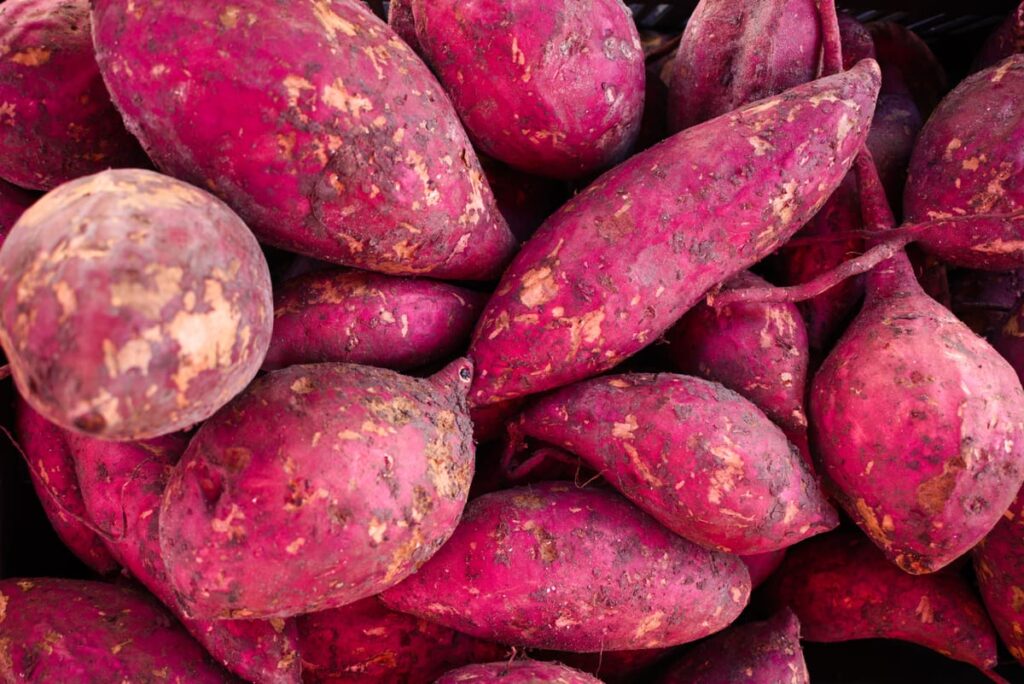
Yes. Most healthy dogs can eat a small amount of plain, fully cooked sweet potato. Peel it, cook it until soft, mash or cut it into a dog-appropriate size, and serve it without butter, oil, salt, sugar, syrup, garlic, onion, or spice. Raw or undercooked chunks are harder to chew and digest and can become a choking or obstruction concern.
Sweet potato is an optional treat or ingredient, not a complete meal and not a treatment for digestive disease. If your dog has diabetes, recurring pancreatitis, a prescription diet, food reactions, or a history of intestinal blockage, ask your veterinarian before adding it.
Can dogs eat sweet potatoes in every form?
Plain cooked sweet potato is the simplest form. Baking, boiling, or steaming without added ingredients can soften the fibers. Let it cool fully, remove tough skin, and break it into a size the dog can chew safely.
Raw sweet potato is not the same as a known systemic poison, but non-toxic does not mean every form is safe to swallow. A hard chunk can be difficult to chew, irritate the stomach, or obstruct the digestive tract. The ASPCA lists Ipomoea batatas, the sweet potato plant, as non-toxic to dogs, while practical feeding safety still depends on preparation.
Canned sweet potato can be used only after checking the label. Choose plain sweet potato rather than pie filling, syrup-packed products, or seasoned puree. Baby food can contain onion or garlic, so a smooth texture does not guarantee a dog-safe ingredient list.
Sweet potato fries, chips, casseroles, and pies are human dishes. Frying oil, butter, salt, sugar, marshmallows, nutmeg, garlic, onion, and other additions can turn a simple vegetable into an unsuitable or dangerous choice.
What sweet potato offers
Sweet potatoes provide carbohydrate, fiber, and plant pigments such as beta-carotene, which the body can convert to vitamin A. They also contain vitamins and minerals. That describes their composition; it does not prove that adding them will improve a specific disease or make a complete dog food better.
A dog’s regular complete and balanced food should already supply required nutrients in appropriate proportions. Treats and toppers can be enjoyable, but adding a nutrient-rich ingredient without considering the whole diet can still add too many calories or upset the intended balance.
Fiber can affect stool, but more is not always better. A small amount may be tolerated while a large sudden portion can cause gas, loose stool, or vomiting. Do not use sweet potato as a universal constipation or diarrhea remedy.
For many healthy dogs, its useful feature is simply that it can be served soft and plain. If the dog does not enjoy it or it causes digestive signs, there is no need to keep offering it.
How to prepare sweet potato for a dog
- Wash the sweet potato and remove damaged or moldy areas.
- Peel it to reduce tough fibrous material.
- Cook it thoroughly by baking, boiling, or steaming without seasoning.
- Allow it to cool.
- Mash it or cut it into small, soft pieces suitable for the dog’s size and eating style.
- Offer a small first taste and monitor before offering it again.
- Refrigerate leftovers promptly and discard spoiled food.
Do not cook the dog’s portion with onion, garlic, butter, oil, salt, or sugar and then try to rinse it. Ingredients can remain throughout the food. Set aside the plain portion before preparing the family recipe.
Homemade dried chews can become hard, sharp, or easy to swallow in large strips. If you make them, use close supervision and a size and texture appropriate for the dog. A soft cooked piece is easier to control.
Do not feed moldy sweet potato or food taken from compost. Mold, fermentation, and other scraps create risks that have nothing to do with the vegetable’s normal safety.
How much sweet potato can a dog have?
There is no useful one-size serving. A small dog’s treat calories are much lower than a large dog’s, and health conditions can change whether sweet potato fits at all. Start with a small bite, not a scoop.
The World Small Animal Veterinary Association advises keeping all treats under 10 percent of a dog’s daily calories and keeping the main diet complete and balanced. The 10 percent is a ceiling for all extras combined, not permission to fill that amount with sweet potato every day.
Count training rewards, chews, dental treats, table food, toppers, and sweet potato together. When weight control matters, your veterinary team can calculate a daily calorie target and decide how much room, if any, exists for extras.
A puppy needs a complete growth diet. Large additions can displace the nutrients and energy density planned for growth. Use tiny portions only if the veterinarian agrees, and do not replace puppy food with a homemade vegetable meal.
Dogs that need extra caution
Diabetes: Sweet potato is a carbohydrate food. Whether it fits depends on the dog’s glucose control, medication, meal timing, and full diet. Do not add it or use it to change blood sugar without veterinary direction.
Prescription or elimination diets: Outside foods can interfere with a therapeutic plan or food trial. Ask before adding any topper.
Digestive disease or prior obstruction: Texture, fiber, portion, and the specific condition matter. A history of swallowing objects or food without chewing raises concern about chunks and dried chews.
Pancreatitis: Plain sweet potato is low in fat, but recipes made with butter or oil are not. A dog recovering from pancreatitis should follow the prescribed diet rather than collecting generic low-fat foods.
Recurring skin or ear problems: Do not assume sweet potato is hypoallergenic. Any ingredient can complicate an elimination trial, and recurring signs need a veterinary plan.
What to do after an accidental serving
If your dog ate a small amount of plain cooked sweet potato and feels normal, remove further access and observe. Mild gas or a softer stool can occur with a new food.
If the dog ate a raw whole sweet potato, a large hard chunk, peel, foil, plastic, a skewer, or a large amount of casserole, call your veterinarian. Keep the recipe or package and identify every added ingredient.
Call promptly for repeated vomiting or diarrhea, appetite loss, abdominal pain, unusual tiredness, or trouble passing stool. Seek urgent care for a swollen abdomen, repeated unproductive retching, collapse, severe weakness, blood, trouble breathing, or inability to keep water down.
If onion, garlic, xylitol, chocolate, raisins, alcohol, or macadamia nuts are in the dish, contact a veterinarian or animal poison-control service immediately. Do not induce vomiting unless a veterinary professional directs you.
Sweet potato and complete dog food
An occasional plain bite is different from evaluating a commercial diet that lists sweet potato high in the ingredients. A complete food must be judged by its nutritional adequacy, formulation, quality-control practices, calorie content, and fit for the individual dog, not by declaring one ingredient good or bad.
Questions about diet-associated heart disease have involved overall formulations and complex dietary patterns, not proof that an occasional piece of plain sweet potato causes heart disease. Do not make a medical diet change from a headline. Discuss the complete product and your dog’s health with a veterinarian.
Use the dog food catalog to inspect recorded label facts and the comparison tool to view products side by side. These tools organize information; they do not diagnose disease or select a therapeutic diet.
Common mistakes
Calling sweet potato non-toxic and serving it raw. Toxicology and physical swallowing safety are separate questions. Cook it soft.
Using casserole leftovers. The butter, sugar, spices, garlic, onion, or marshmallow topping may be more important than the vegetable.
Adding a large scoop for fiber. Sudden extra fiber can worsen gas or diarrhea. Persistent stool changes need a cause, not endless topping adjustments.
Confusing sweet potato with white potato. They are different plants and have different concerns. Identify what the dog actually ate.
Replacing balanced food. Sweet potato alone does not supply a dog’s complete nutrient needs.
Quick answers
Can dogs eat sweet potato skin? The skin is not the main toxic concern, but it can be tough and harder to digest. Peeling gives a softer, more predictable treat.
Can dogs eat purple sweet potato? Plain, correctly identified sweet potato varieties can generally be approached in the same cooked, modest way. Avoid unknown ornamental plants and mixed recipes.
Can sweet potato stop diarrhea? Do not use it as a universal remedy. Some dogs tolerate fiber; others get worse. Repeated diarrhea, blood, pain, weakness, or dehydration needs veterinary guidance.
Can dogs eat sweet potato every day? Daily use is not necessary. If it is part of a veterinarian-directed or properly formulated diet, follow that plan. Otherwise keep it an occasional extra.
Sources
- ASPCA Animal Poison Control: Sweet Potato Vine
- PetMD: Can Dogs Eat Sweet Potatoes? (veterinarian reviewed)
- WSAVA Global Nutrition Committee: Feeding Treats to Your Dog
This guide is general education. It cannot set a portion for diabetes, digestive disease, a prescription diet, or an individual exposure.
Keep exploring
Next reads and tools
Next route
Browse products
Move from article context into real formula review when you want to compare options.
Open routeIngredient context
Inspect ingredients
Use the ingredient library when one concept in the article needs label-level context.
Open routeTrust boundary
Review methodology
See how scoring, interpretation, and explanation boundaries work across the platform.
Open route