Salmon Oil for Dogs and Cats: A Clear Guide
Salmon oil provides EPA and DHA, but more is not always better. Learn how to read amounts, discuss dosing, store it, and spot problems.
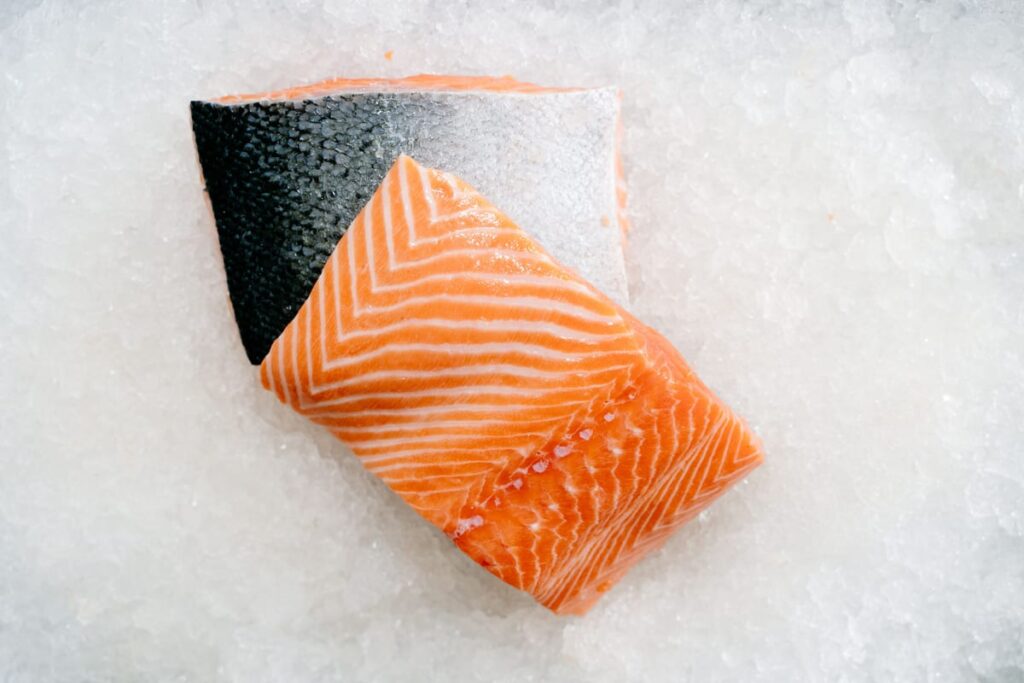
Salmon oil is often sold with shiny-coat, joint, heart, brain, or immune claims. That list can make a bottle feel like a simple upgrade for every pet. It is still a concentrated source of fat with active nutrients, extra calories, and possible side effects. The sensible question is not “Is salmon oil good?” It is “What are we trying to change for this dog or cat, and is this product and amount appropriate?”
Salmon oil for dogs and cats mainly interests veterinarians because it can supply the long-chain omega-3 fatty acids EPA and DHA. Those fatty acids have biological effects, and research supports some uses more clearly than others. Evidence, dose, and safety differ by species and condition. A dose studied for a dog with osteoarthritis should not be copied to a healthy cat or a puppy.
Before opening a bottle, look at what your pet already eats, decide on a specific goal with the veterinarian, and count the EPA and DHA—not just the large “fish oil” number on the front.
What salmon oil actually adds
Omega-3 is a family of fatty acids, not one single substance. Plant oils often provide alpha-linolenic acid, or ALA. Marine oils commonly provide EPA and DHA. Dogs and cats do not necessarily convert plant-source ALA into EPA and DHA efficiently enough to treat the numbers as interchangeable, so the label should state the actual EPA and DHA content when those are the reason for use.
A complete and balanced food may already contain marine oil or other omega-3 sources. The guaranteed analysis might list a total omega-3 minimum, but that total does not always tell you how much is EPA or DHA. Contact the food maker for a typical analysis of EPA and DHA per calorie or per amount fed. Then a veterinarian can consider the whole diet before adding more.
Fatty-acid deficiency is uncommon in pets eating a properly stored complete diet. A dull coat, flaky skin, low energy, or poor appetite can have many causes. Adding oil without examining the underlying problem may delay diagnosis. A pet with new skin changes, weight loss, persistent digestive signs, or another change in health deserves a veterinary assessment.
Salmon oil is also different from cod liver oil. Cod liver oil can supply substantial vitamins A and D as well as fatty acids. Those fat-soluble vitamins can accumulate and become harmful in excess. Do not substitute one oil for another based on the word “fish.”
What the evidence can and cannot promise
Research on EPA- and DHA-containing diets or supplements spans several conditions, but the strength of evidence is uneven. In dogs with osteoarthritis, evidence supports a role for omega-3-enriched diets or EPA in improving some measures of mobility and comfort as part of a broader treatment plan. That does not mean oil repairs a joint, removes pain immediately, or replaces weight management, controlled activity, rehabilitation, or prescribed medicine.
Studies have also explored skin disease, heart disease, kidney disease, cancer, and other conditions. Results vary by species, diagnosis, product, dose, and study design. A systematic review found possible benefits for several companion-animal conditions while also noting that stronger studies were needed in some areas. That is a reason for a condition-specific discussion, not a reason to attach every possible benefit to every bottle.
Cats are not small dogs. Evidence for a use in dogs cannot simply be scaled down and presented as a feline recommendation. Cats also have different food preferences, energy needs, and health risks. If a cat has arthritis, kidney disease, skin disease, or another condition, the veterinarian should weigh the evidence and the whole treatment plan.
For a healthy pet eating a complete diet, there may be no clear problem for a supplement to solve. “General wellness” is hard to measure and can lead to a product being continued without anyone checking whether it helps. Set a concrete goal such as a veterinary mobility score or a defined skin measure, and agree on when to reassess.
There is no single safe dose for every pet
Product labels may give an amount by body weight, but that is only one piece of the decision. Appropriate intake can depend on species, current diet, medical goal, age, body condition, digestive tolerance, medications, and the exact EPA and DHA concentration. Two pumps from one bottle may be very different from two pumps of another.
Look for milligrams of EPA and DHA per capsule, teaspoon, or pump. “1,000 mg salmon oil” does not mean 1,000 mg of EPA plus DHA. If the label gives only total fish oil or total omega-3, ask the company for the specific values. Also check how consistent one pump is; a kitchen teaspoon or a marked oral syringe may be easier to measure accurately when the veterinary plan permits it.
Do not calculate a medical dose from a human supplement article. Human products may have different concentrations, added flavors, vitamins, sweeteners, or other ingredients. Xylitol is dangerous to dogs and should never be in a product given to them. A pet product is not automatically suitable either; read the full label and ask about unclear ingredients.
Bring the food label, supplement label, your pet’s weight, and a complete medicine list to the veterinarian. Include nonprescription pain relievers, herbs, and other supplements. Ask for the target amount of EPA and DHA, how that target accounts for the base diet, and how long to try it before judging the result.
Side effects and interactions are real
The most visible problems are often digestive: soft stool, diarrhea, vomiting, reduced appetite, or a fishy odor. Because oil is calorie-dense, it can also contribute to weight gain. Adding oil on top of the usual portion changes the day’s energy intake, so the base food amount may need adjustment under veterinary guidance.
Published veterinary reviews describe other potential concerns at high intakes or in susceptible patients, including effects on platelet function, wound healing, immune responses, nutrient balance, and control of blood sugar. Pancreatitis has been reported rarely in discussions of fatty-acid supplementation, and a pet with a history of pancreatitis or poor fat tolerance needs particular caution.
Interactions matter. Tell the veterinarian about anticoagulants, antiplatelet drugs, anti-inflammatory medicine, insulin or other diabetes treatment, and any planned surgery. Do not stop a prescribed drug, and do not use fish oil as a substitute for it. The clinician may decide the combination is reasonable, adjust the plan, or choose not to add the supplement.
Stop the product and contact the veterinary team if new vomiting, diarrhea, unusual bruising or bleeding, marked lethargy, appetite loss, or another concerning change appears. Seek urgent care for collapse, breathing trouble, repeated vomiting, severe weakness, or signs of a serious allergic reaction such as facial swelling.
Choose a product by its useful information
A helpful label identifies the fish source, gives EPA and DHA per measured serving, lists all other ingredients, provides a lot number and expiration or best-by date, and includes storage directions and company contact information. A large total-omega number without EPA and DHA detail makes accurate use harder.
Ask the company how it verifies identity, purity, oxidation, and the stated fatty-acid amounts. Independent quality certification can add useful information, but a seal should be checked with the certifying organization rather than accepted from package artwork alone. No seal can decide whether the supplement is appropriate for your individual pet.
Avoid products that rely on sweeping health promises while hiding the actual EPA and DHA content. Be cautious with added vitamins, herbs, flavorings, or multiple active ingredients. A simpler product is easier to assess when the goal is specifically marine omega-3 intake, though “simple” still does not guarantee quality.
You can review required package information with our guide to reading a pet food label. If you are considering more than one supplement, keep each label and compare active amounts rather than front-panel serving claims. The supplement library can help you organize the questions to take to your veterinary appointment.
Freshness and storage change the product
Polyunsaturated oils are vulnerable to oxidation. Heat, light, air, and time can speed deterioration. Follow the manufacturer’s storage instructions, close the cap promptly, and do not pour oil into an unmarked container. A pump should be kept clean and protected from food debris.
Buy a container size your household can finish within the stated period after opening. A huge bottle is not a bargain if it sits warm and open for months. Write the opening date on it. Check the best-by date and lot number before use, and keep that information until the product is finished.
Odor is an imperfect test because fish oil naturally smells marine and flavorings can mask change. If the product smells sharply rancid, looks unusual, leaks, or was stored outside the label instructions, do not keep using it while guessing. Contact the manufacturer or replace it after asking the veterinarian how to handle missed doses.
Do not cook the oil unless the label specifically says to. Add it as directed to a portion your pet will finish, rather than leaving it in a bowl for a long time. Wash oily bowls and measuring tools well.
A practical plan before the first dose
- Name the goal. Write down the condition or measurable reason the supplement is being considered.
- Check the base diet. Confirm the food’s EPA and DHA contribution with the manufacturer when possible.
- Review the pet. Discuss weight, body condition, digestive history, pancreatitis risk, disease, medicines, and upcoming procedures.
- Read the supplement. Find EPA and DHA per measured unit, other ingredients, lot information, and storage instructions.
- Get a specific plan. Ask the veterinarian for the amount, schedule, transition if needed, and reassessment date.
- Measure and record. Track appetite, stool, weight, the target symptom, and any new sign.
- Reassess honestly. Continue, adjust, or stop based on benefit, tolerance, and veterinary guidance rather than the hope that more must be better.
This approach may feel slower than buying the most persuasive bottle. It is also more humane. Your dog or cat does not need the largest omega-3 number; they need a reasoned amount that fits their whole diet and health.
Sources
- Merck Veterinary Manual: nutritional requirements and essential fatty acids in dogs and cats
- Journal of Veterinary Internal Medicine review: potential adverse effects of omega-3 fatty acids in dogs and cats
- Systematic review of EPA and DHA supplementation in companion-animal disease
- U.S. Food and Drug Administration: xylitol and dogs
Keep exploring
Next reads and tools
Next route
Browse products
Move from article context into real formula review when you want to compare options.
Open routeIngredient context
Inspect ingredients
Use the ingredient library when one concept in the article needs label-level context.
Open routeTrust boundary
Review methodology
See how scoring, interpretation, and explanation boundaries work across the platform.
Open route