Best Cat Trees for Large Cats: A Safe Buying Guide
Choose a large-cat tree by stability, usable platform size, easy access, and replaceable scratching areas—not by height or marketing photos alone.
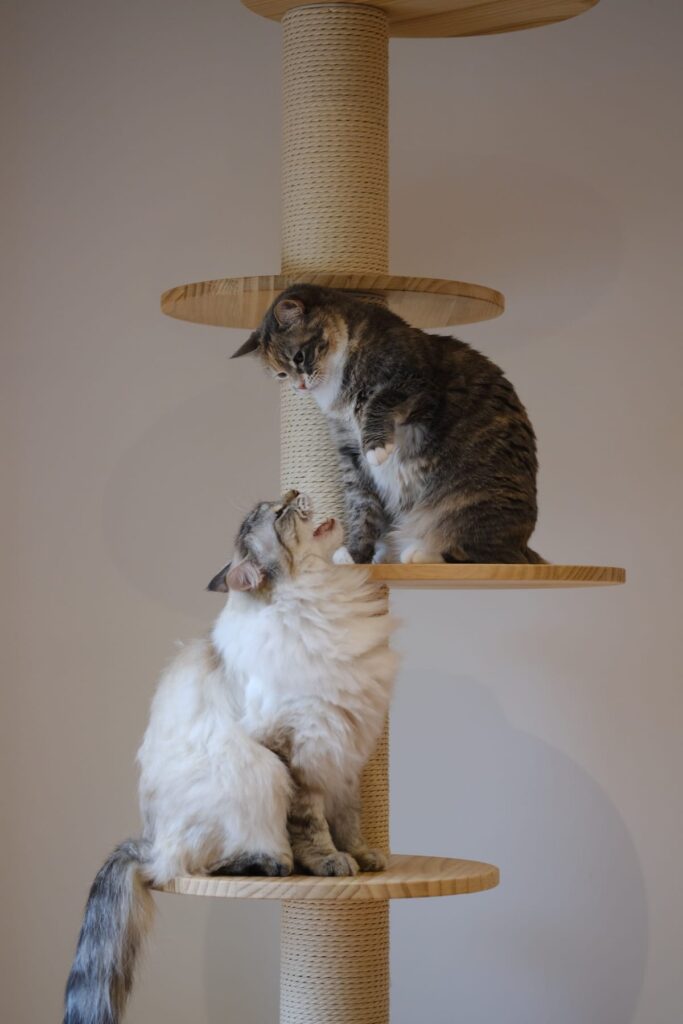
Verdict: The best cat trees for large cats are wide and steady before they are tall. A useful tree gives the whole cat room to turn, stretch, rest, and climb without making the base rock or the platforms twist.
That sounds simple, but many listings lead with total height and a staged photo. Height is only one measurement. A tall tower with a narrow base, short posts, tiny beds, or awkward gaps may look impressive and still be frustrating for a big cat. Start with the cat’s body and movement, then check whether the furniture fits the room.
Key takeaways
- Measure your cat from nose to rump and watch how the cat jumps before shopping.
- Favor a broad, heavy base and a layout that keeps the center of weight over that base.
- Check the usable dimensions of beds, platforms, openings, and ramps—not only the tree’s total dimensions.
- Look for at least one long, sturdy scratching surface that allows a full-body stretch.
- Use wall anchors when the maker provides or recommends them, especially on tall models.
- Inspect fasteners, fabric, rope, and joints regularly. Cat furniture wears out.
Why size changes the buying decision
A large cat puts more force into every jump and landing. The tree needs to handle that force without tipping, walking across the floor, or loosening at a narrow connection. Size also changes comfort. A round perch that fits a small cat may leave a larger cat balancing with the hips or shoulders unsupported.
Breed labels are not enough. Maine Coons are often large, but two adult Maine Coons can have different frames, weights, ages, and mobility. A mixed-breed cat may be just as long or heavy. TICA notes that adult Maine Coons mature slowly and can be substantial, but your own measurements are more useful than an average.
Measure the cat while relaxed if possible. Nose-to-rump length helps with beds and platforms. Shoulder width helps with cubby doors. Watch the cat use a sofa, windowsill, or existing shelf. Does the cat leap straight up, climb in steps, pull with the front legs, or hesitate before coming down? Real movement tells you what the layout needs to do.
Stability comes before height
Picture the cat landing near the outer edge of the highest platform. That is the moment the base and frame have to control. A wider base generally gives a better starting point, while a heavy lower section helps keep the structure planted. Posts that rise directly above support points tend to feel more solid than long platforms hanging far to one side.
Look closely at product diagrams. A “floor footprint” may include a soft hammock or angled ladder that contributes little to stability. Check the dimensions of the rigid base board. Read the assembly guide if it is available. It can reveal how many bolts connect the main columns and whether the upper structure relies on one narrow post.
A manufacturer’s weight limit can be useful, but it is not a universal safety standard. Ask whether the limit applies to one platform, one bed, or the whole tree. Reviews that describe wobbling can flag a problem, yet they cannot tell you whether the unit was assembled correctly or placed on an uneven floor.
Tall furniture should be anchored when possible. Use the supplied anti-tip hardware or hardware appropriate for your wall and follow the manufacturer’s directions. If you rent, discuss safe attachment options with the property owner rather than assuming a tension pole or furniture weight makes anchoring unnecessary.
Check every usable surface
Total width is not platform width. Zoom in on the dimension drawing and list the actual resting areas. A large cat should be able to step onto a platform with all four paws, turn without squeezing around a post, and settle without hanging most of the body over an edge.
Raised rims can make a bed feel secure, but they reduce the flat area inside. A “15-inch bed” may refer to its outer diameter. The inner sleeping space can be much smaller after padding and bolsters. Rectangular trays often use space more efficiently than deep round cups, though individual cats have strong preferences.
For cubbies, check the door opening and interior floor separately. The cat must be able to enter without twisting, and the box must be long enough for a normal resting position. More cubbies do not add value if none fits.
Also inspect the route between levels. Large vertical gaps may be manageable for a healthy young cat and difficult for a senior, a cat with joint pain, or a cat recovering from injury. Offset platforms, a ramp with real traction, or a series of broad steps can make both the climb and descent easier.
Scratching surfaces need real stretch room
Scratching is normal cat behavior, not a bad habit. The Ohio State University Indoor Pet Initiative recommends a vertical post tall enough for a cat to stretch and sturdy enough not to fall over. For a large cat, that often rules out the short rope sections placed between closely spaced platforms.
Find the longest uninterrupted scratching area on the tree. The cat should be able to stand on the floor or a secure platform, reach high, and pull down without hitting another shelf immediately. A separate tall scratching post may still be worthwhile if the tree cannot provide that motion.
Material preference matters. Some cats choose sisal rope, some prefer woven sisal, cardboard, carpet, or bare wood. Look at what your cat already scratches before buying. Replaceable rope sections or removable scratch panels can extend the life of the frame.
The AAFP and ISFM environmental guidelines treat scratching areas, elevated perches, resting places, and safe hiding areas as distinct resources. One cat tree can offer several of them, but it does not have to do everything. A stable perch plus a separate preferred scratcher can work better than a crowded all-in-one tower.
Choose a layout for your cat’s age and confidence
A bold young cat may enjoy an open top perch with a clear view. A cautious cat may use an enclosed bed lower down before exploring higher levels. An older cat may still want height but need shorter steps and more landing space. The goal is access, not an obstacle course.
Think about coming down as carefully as going up. Cats often descend with more caution because they cannot see every landing in the same way. Platforms should overlap enough to create a clear route. Avoid layouts that force a large cat to jump from the top directly to the floor.
If the cat has pain, weakness, poor balance, or a recent change in jumping, talk with a veterinarian. Furniture can make access easier, but it does not explain or fix a medical mobility problem.
If you are preparing for a Maine Coon, our Maine Coon cost guide covers the purchase and ongoing budget. The body size described by a breeder is still only a forecast, so choose adjustable or generous furniture rather than fitting a kitten’s current measurements too closely.
Placement can make a good tree useful
Cats often value an elevated position because it lets them observe the room. The feline environmental guidelines describe vertical space as a meaningful part of the home environment. A stable tree near a window or in a room where the household spends time may get more use than one hidden in an empty corner.
Safety changes the placement. Keep the tree away from a hot stove, an unsecured open window, blind cords, fragile shelves, and doors that can strike it. Leave enough ceiling clearance for the cat to stand on the top bed. On slick flooring, use the maker’s recommended nonslip solution without treating it as a substitute for a sound base.
In a multi-cat home, one tower may become a guarded resource. The guidelines recommend multiple and separated resources so cats can avoid competition. Offer more than one elevated resting option and more than one route through important rooms. Do not force cats to pass each other on a single narrow platform.
Assembly and maintenance are part of safety
Assemble the tree on a clear, level surface. Match every fastener to the instructions, tighten the structure in the recommended order, and install anti-tip hardware. After assembly, push gently at several levels before inviting the cat to climb. Stop if the base lifts or a joint shifts.
Recheck bolts after the first days of use because compressed fabric and fiber can allow connections to settle. Then inspect the tree on a routine schedule. Look for exposed staples, sharp fasteners, cracked boards, loose caps, unraveling rope, torn fabric loops, and movement at joints.
Clean according to the maker’s directions. Avoid soaking engineered wood, leaving strong fragrance behind, or using a cleaner that is unsafe around cats. Let every surface dry fully before use.
A simple way to compare your shortlist
Give each candidate a yes, no, or unclear for these questions:
- Is the rigid base broad enough for the height and layout?
- Can it be anchored securely?
- Is at least one bed long and wide enough for the whole cat?
- Are the platform and cubby dimensions stated clearly?
- Is there a safe route up and down for this cat?
- Is one scratching area tall and unobstructed?
- Can worn scratching or bedding parts be replaced?
- Can you place it where the cat wants to spend time?
Reject a tree when a critical dimension or attachment detail stays unclear after you ask the seller. A lower, better-supported design is often more useful than a dramatic tower that makes you nervous every time the cat jumps.
For other practical choices, browse the cat product catalog. If food is next on your setup list, use our cat food selection guide to read the label before choosing a formula.
Sources
- AAFP and ISFM Feline Environmental Needs Guidelines: https://pmc.ncbi.nlm.nih.gov/articles/PMC11383066/
- The Ohio State University Indoor Pet Initiative, scratching: https://indoorpet.osu.edu/node/449
- The International Cat Association, Maine Coon breed overview: https://tica.org/breed/maine-coon/
Keep exploring
Next reads and tools
Next route
Browse products
Move from article context into real formula review when you want to compare options.
Open routeIngredient context
Inspect ingredients
Use the ingredient library when one concept in the article needs label-level context.
Open routeTrust boundary
Review methodology
See how scoring, interpretation, and explanation boundaries work across the platform.
Open route